

Word Puzzle - Crossword Games
People Lovin Games
I approached Word Puzzle - Crossword Games as the kind of game you open when you want to exercise your vocabulary without turning the moment into a serious study session. It is a free word game from People Lovin Games, built around crossword-style puzzles and intended for casual play, including offline sessions and games shared with friends. After spending time with it, I found its main appeal fairly clear: it is simple to start, easy to fit into short breaks, and more mentally engaging than a game that asks you only to tap through obvious choices.
That simplicity is also the key to deciding whether it belongs on your phone. If you enjoy discovering words from a small set of letters, filling a grid gradually, and returning to a puzzle later, this is an approachable option. If you want a deep campaign, detailed explanations for every answer, or a highly competitive online experience, you may find it too restrained. My recommendation therefore depends less on whether you like word games in general and more on the kind of crossword experience you want every day.
What to consider before choosing this crossword game
The first useful question is how you normally play. I tend to divide word-game players into three groups: people who want a quiet solo challenge, people who like comparing progress with friends, and people who want a structured learning tool. This game fits the first two groups more naturally. Its offline focus makes it practical for travel, waiting rooms, or a commute where a reliable connection is not guaranteed. The social angle adds another reason to return, but it does not turn the game into a full multiplayer platform.
The second question is how much guidance you need. Crossword games can be relaxing when the clues and letter combinations lead you forward, but they can also become frustrating when one missing answer blocks an otherwise completed board. Here, I would treat the game as a test of patience as much as vocabulary. It works best when you are comfortable putting a puzzle aside rather than expecting every round to be solved immediately.
Device compatibility is another practical consideration. The game supports Android devices running version 7.1 or later, which makes it accessible to people who do not use a recent phone. The current release is version 2.7, so I would still check that your device runs smoothly before committing to long sessions, especially if you prefer older hardware. The game itself is not the sort of app I would choose for demanding graphics; its value is in the word challenge rather than visual spectacle.
Related News






Its audience is broad because the content rating is Everyone. That makes it suitable for a family device or for a child who already enjoys word puzzles, although younger players may still need help with unfamiliar vocabulary. I would not mistake an Everyone rating for a promise that every clue will be easy. A puzzle can be appropriate for all ages and still require spelling knowledge, patience, and a willingness to experiment.
The public response gives the game a 4.5 average from around 1.1 thousand ratings, with more than a hundred written reviews. It has also passed the 100K-install mark, which suggests that it has found a steady audience without making popularity the main reason to try it. I see those figures as a useful confidence signal, not as proof that it will suit every player. Word games are especially personal: a clue style that feels satisfying to one person can feel vague to another.
How I judge the everyday experience
For me, the most important test is whether I can understand the game quickly and still have a reason to return after the first session. Crossword-style games often succeed when they remove unnecessary setup. I want to open the app, see the puzzle, and begin thinking. This title is strongest when treated as a compact mental break rather than a large entertainment destination.
Gallery
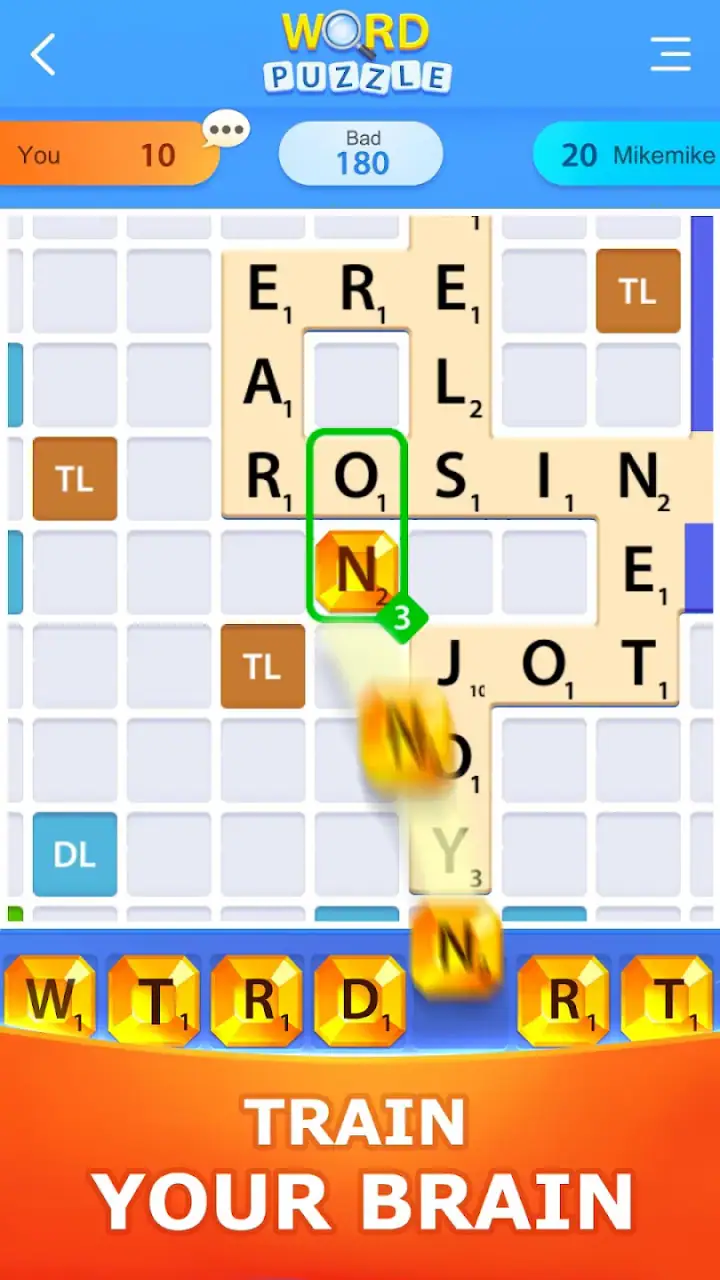
I also pay attention to whether the game rewards careful observation. A good word puzzle should make me reconsider a possible answer, notice a connection between letters, or remember a word I had temporarily forgotten. That process is more satisfying than simply guessing until something fits. I found the game most enjoyable when I slowed down and used the crossing letters to narrow the possibilities instead of forcing the first word that came to mind.
One practical tip is to use a two-pass approach. On the first pass, I fill the answers that feel certain and leave awkward spaces alone. On the second pass, the existing letters make the difficult entries easier to recognize. This is more effective than repeatedly attacking the same stubborn clue, and it keeps the experience from becoming a test of random guessing.
A second useful habit is to treat the game as a vocabulary notebook in your head. When an answer feels unfamiliar, I try to remember its spelling and meaning rather than immediately moving on. The game can support word practice in that informal way, but I would not use it as a replacement for a dedicated language-learning app. It encourages recognition and recall; it does not automatically provide the lessons, pronunciation practice, or explanations that a learner may need.
Where this game wins over heavier alternatives
The strongest advantage is its low commitment. I can play for a few minutes without needing to remember a complicated storyline, manage a character, or learn a large set of rules. That makes it a good companion for small gaps in the day. A coffee break, a quiet moment before bed, or a short wait becomes enough time for meaningful play.
Offline availability matters more than it may seem. Many mobile games assume that the player is connected, but a word puzzle is particularly well suited to offline use because its core activity does not require a live world. I would choose this game over a connection-dependent alternative for a flight, a train journey through unreliable coverage, or a phone with limited data. The trade-off is that the social aspect is less central than it would be in a constantly connected word battle.
The game also has a useful middle ground between a traditional newspaper crossword and a very casual word-matching title. A newspaper puzzle can provide richer clue writing and a stronger sense of ritual, but it may be less convenient when I only have my phone. A simple letter-matching game can be faster, yet sometimes feels more repetitive. This title is a better fit when I want the compactness of a mobile game with at least some of the thought process associated with crosswords.
Its free entry is another reason I would suggest trying it before looking for a more elaborate alternative. The game is free to download, while optional in-app purchases range from $0.99 to $1.99 per item. I appreciate that the basic decision is easy: install it, play, and decide whether the puzzle style works for you. Still, I would pay attention to how often I feel tempted to buy assistance or extras. A free game can become less satisfying if progress starts to feel tied to spending.
One non-obvious strength is that it can work as a shared, low-pressure activity. Instead of handing the phone around for a competitive match, two people can discuss a difficult answer and use their different vocabularies together. That makes it suitable for a parent and child, partners, or friends who enjoy solving rather than winning. The limitation is that this kind of cooperation depends on the people playing; the game should not be chosen if you need a sophisticated team system or live matchmaking.
Where a different word-game category may fit better
I would choose a dedicated crossword publication over this game if clue quality and editorial variety were my top priorities. Traditional crossword products often appeal to players who want themed grids, carefully calibrated difficulty, and a stronger sense of authorship. This mobile game is more convenient and approachable, but it should not be expected to recreate the full newspaper or magazine experience.
I would also look elsewhere if my main goal were language study. A vocabulary-learning app is usually better for spaced repetition, definitions, pronunciation, and progress tracking. This game can make me think about spelling and word recognition, but its entertainment-first format does not replace a structured course. It is best used alongside learning, perhaps as a lighter way to revisit familiar words.
Players who prefer fast competition may be happier with a real-time word battle. Those games create urgency through timers, rankings, or direct opponents. Word Puzzle - Crossword Games is more comfortable when I can pause, reflect, and solve at my own pace. That is a strength for relaxed play, but a weakness if the excitement comes from pressure and immediate comparison.
There is also a clear difference from word searches and anagrams. Word searches are often visual scanning exercises, while anagram games emphasize rearranging letters quickly. Crossword puzzles ask for a more deliberate combination of clue interpretation, spelling, and cross-checking. If you enjoy spotting patterns but dislike uncertainty over a clue, a word-search game may feel more rewarding. If you like language but want a faster rhythm, an anagram title may be the better choice.
Another trade-off concerns replay motivation. Some players return because they want to improve a personal score, others because they want new stories or characters, and others because they enjoy a daily ritual. This game’s appeal is concentrated in solving the puzzles themselves. If that core loop does not hold your attention, there may not be enough surrounding content to compensate. I would skip it for that reason if I already know I need narrative progression or a large collection of changing game modes.
What switching to it is really like
Moving from another casual word game should be easy because the mental skill transfers well. I do not need to learn a complex control scheme or spend a long time preparing a profile before playing. The bigger adjustment is psychological: a crossword-style puzzle rewards leaving gaps and returning later, whereas some word games encourage constant rapid answers. Giving myself permission not to solve everything immediately made the experience much more pleasant.
If I were replacing a paper crossword, the main gain would be convenience. The phone is always available, and offline play removes one common obstacle. The main loss would be the physical ritual of a printed page and pencil. Some people genuinely think better on paper, especially when they like marking possibilities or seeing a whole puzzle spread out. For them, this game is a useful backup rather than a complete replacement.
If I were replacing a language app, I would keep realistic expectations. This game may help me notice spelling patterns and retrieve words under pressure, but it does not organize practice around my weaknesses. I would use it after a lesson or during a break, not as the only tool for building vocabulary. That distinction prevents disappointment and gives the game a clear role.
The purchase model is another part of the switching cost. Because the game is free, trying it does not require a financial commitment at the beginning. Optional items cost between $0.99 and $1.99 each, so I would decide in advance whether I am comfortable spending on convenience or additional support. My advice is to play naturally for a while first. If the core puzzles are not enjoyable without extras, buying items is unlikely to fix the underlying mismatch.
A realistic everyday scenario would be a short train ride with no dependable signal. I could open the game, solve a few straightforward entries, and stop when my station arrives. Later, I could return to the same mental challenge without needing to reconstruct a complicated session. On a different day, I might show a difficult puzzle to a friend and compare our guesses. That flexibility is more valuable to me than a long uninterrupted campaign.
Small habits that make the puzzles more enjoyable
I recommend starting with the clues or entries that give the most information, not necessarily the ones that look easiest. A short answer with a distinctive letter can unlock several crossing spaces, while a longer uncertain answer may waste time. This is a general crossword principle, but it matters especially in a compact mobile format where I may only have a few minutes to play.
When I get stuck, I change the task instead of staring at the same blank area. I might scan for another answer, say possible words aloud, or look at the pattern of known letters from a different angle. This helps separate a genuine vocabulary gap from simple mental fatigue. If nothing moves, closing the game and returning later is not failure; the delayed solution is often the most satisfying part.
For shared play, I would avoid having one person take over the phone. It is more enjoyable when each player suggests possibilities and explains why a word might fit. That turns a small puzzle into a conversation about spelling and meaning. It also reveals one of the game’s limitations: the social value comes from the people around you, not from a richly developed cooperative system that manages the interaction for you.
I would also keep the in-app purchase option in perspective. If a puzzle becomes a source of stress, a paid aid may make the moment easier, but using help too quickly can remove the productive struggle that makes word games worthwhile. My preference is to reserve assistance for a genuine dead end and first try the two-pass method. That keeps the game feeling like a puzzle rather than a sequence of prompts to bypass.
My recommendation for different kinds of players
I recommend it to someone who wants a free, accessible crossword-style game that can be played offline and shared casually with friends. It is particularly suitable for short sessions, older Android devices that meet the minimum requirement, and players who enjoy improving their word skills through repeated recall rather than formal lessons. The Everyone rating also makes it a reasonable family-friendly choice, provided younger players are comfortable with the vocabulary involved.
I would be more cautious about recommending it to an experienced crossword enthusiast who expects sophisticated themes, highly distinctive clue writing, or a polished newspaper-style routine. I would also point language learners toward a dedicated educational app if measurable study progress matters more than relaxed practice. Competitive players who want live opponents and constant rankings should consider a game built specifically around that format instead.
My final view is positive but deliberately modest. This is best understood as a convenient word-puzzle companion, not an all-purpose language or competition platform. Its free starting point, offline usefulness, approachable crossword format, and optional social play give it a clear place on a phone. Its limitations are equally clear: the experience depends heavily on whether the basic puzzle loop satisfies you, and players seeking depth may outgrow it.
People Lovin Games has made a game that is easy to try and easy to fit into ordinary life. I would keep it installed for travel, short breaks, and relaxed solving with another person. If that sounds like the kind of challenge you want, Word Puzzle - Crossword Games is worth trying before paying for a more specialized alternative. If you need detailed teaching, elaborate progression, or intense competition, I would save your time and choose a category designed around those priorities instead.
FAQs for Word Puzzle - Crossword Games
What is Word Puzzle - Crossword Games?
Word Puzzle - Crossword Games is a vocabulary and brain-training game built around crossword-style challenges. Players solve clues, connect letters, and complete word grids across a variety of levels. The game is designed for casual sessions, making it suitable for playing at home, during a commute, or whenever you want a short mental challenge without committing to a long gaming session.
Is Word Puzzle - Crossword Games free to download and play?
The game can generally be downloaded and played for free, although some features may be supported by advertisements or optional in-app purchases. Depending on the version installed, purchases may provide hints, remove advertising, or unlock additional content. Before downloading, it is worth checking the store listing for the current pricing, subscription details, and whether any items require real money.
Can I play Word Puzzle - Crossword Games without an internet connection?
Many basic word puzzles can usually be played offline once the necessary game content has loaded, which makes the app convenient for travel or areas with limited connectivity. However, certain functions may still require an internet connection, including advertisements, cloud synchronization, updates, leaderboards, or in-app purchases. Offline availability can vary by device and app version.
Is Word Puzzle - Crossword Games suitable for children and beginners?
The game is generally accessible to beginners because its crossword format is easy to understand and the early levels typically introduce the mechanics gradually. It can also help players practice spelling, vocabulary, and concentration. Nevertheless, difficulty and clue styles may vary, so parents should review the content, advertising, and purchase settings before allowing younger children to play without supervision.
Does Word Puzzle - Crossword Games include hints or assistance when a puzzle is difficult?
Word Puzzle - Crossword Games commonly provides assistance options for players who get stuck, such as revealing a letter, removing incorrect letters, or displaying part of an answer. These tools can make challenging levels more manageable, but they may be limited or connected to an in-game currency. Using hints carefully is recommended if you want to preserve the challenge and avoid spending resources too quickly.
Pros
- Relaxing gameplay suitable for short breaks or longer sessions.
- Progressive difficulty keeps the puzzles engaging over time.
- Hints help players continue without making every puzzle too easy.
- Clean interface makes clues and letters easy to read.
- Works well for players who enjoy vocabulary and spelling challenges.
Cons
- Some puzzles may use uncommon words or region-specific vocabulary.
- Repeated puzzle formats can feel predictable after extended play.
- Hints may reduce the challenge for experienced crossword players.
- Small mistakes can be frustrating when limited attempts are available.
- Ad interruptions may affect the flow between puzzles.


